
Two botanicals dominate the natural hair growth conversation: onion oil and rosemary oil. Both have genuine research behind them, both have passionate fans, and they work in completely different ways.
So which one should you use? Let's look at what each actually does — and then I'll share why I stopped choosing.
How onion oil works
Onion's hair benefits come primarily from nutrition and scalp conditioning:
- Sulfur compounds — Onion is rich in sulfur, a building block of keratin, the protein your hair is made of. The theory: supplying sulfur at the scalp supports stronger-feeling strands and less breakage.
- Antioxidants (quercetin) — Help calm oxidative stress around the follicle.
- Antimicrobial action — Lab studies show onion extract inhibits bacteria and fungi linked to scalp issues, supporting a healthier scalp environment.
The evidence: The most-cited trial (Sharquie & Al-Obaidi, 2002, Journal of Dermatology) found ~87% of alopecia areata patients saw regrowth with twice-daily raw onion juice over 6 weeks. Honest caveats: small study, specific condition, raw juice (not oil), never replicated at scale. Promising — not conclusive.
Best for: Breakage-related thinning, weak roots, dry or flaky scalp, and anyone whose shedding is tied to poor scalp condition.
How rosemary oil works

Rosemary's benefits come primarily from circulation:
- Improved blood flow — Rosemary stimulates circulation to the scalp, delivering more nutrients to follicles. This is its best-understood mechanism.
- 5-alpha reductase inhibition — Early research suggests rosemary may modestly inhibit the enzyme involved in DHT-related follicle miniaturization (the driver of pattern hair loss).
The evidence: A 2015 randomized trial (Panahi et al., Skinmed) compared rosemary oil to 2% minoxidil over 6 months. Both groups saw significant increases in hair count, with no significant difference between them — and the rosemary group reported less scalp itching. That's a serious result from a head-to-head design.
Best for: Thinning related to poor circulation, pattern-type thinning, and anyone who wants a well-tolerated long-term option.
Head-to-head comparison
| Onion oil | Rosemary oil | |
|---|---|---|
| Main mechanism | Sulfur nutrition + scalp conditioning | Scalp circulation |
| Strongest evidence | One small 2002 trial (juice, alopecia areata) | 2015 trial vs. 2% minoxidil (oil, 6 months) |
| Best for | Breakage, weak roots, scalp issues | Circulation-related thinning, pattern thinning |
| Smell | Mildly herbal in a good formulation; strong if DIY | Fresh, herbaceous, widely liked |
| Irritation risk | Low in formulated oils; high as raw juice | Low |
| Time to judge results | 3–4 months consistent use | 3–6 months consistent use |
The verdict: you don't have to choose

Here's the thing most comparison articles won't tell you: these two don't compete — they complement.
Onion addresses nutrition, keratin building blocks, and scalp condition. Rosemary addresses circulation and delivery. They're solving different parts of the same problem, which is exactly why combining them covers more ground than either alone.
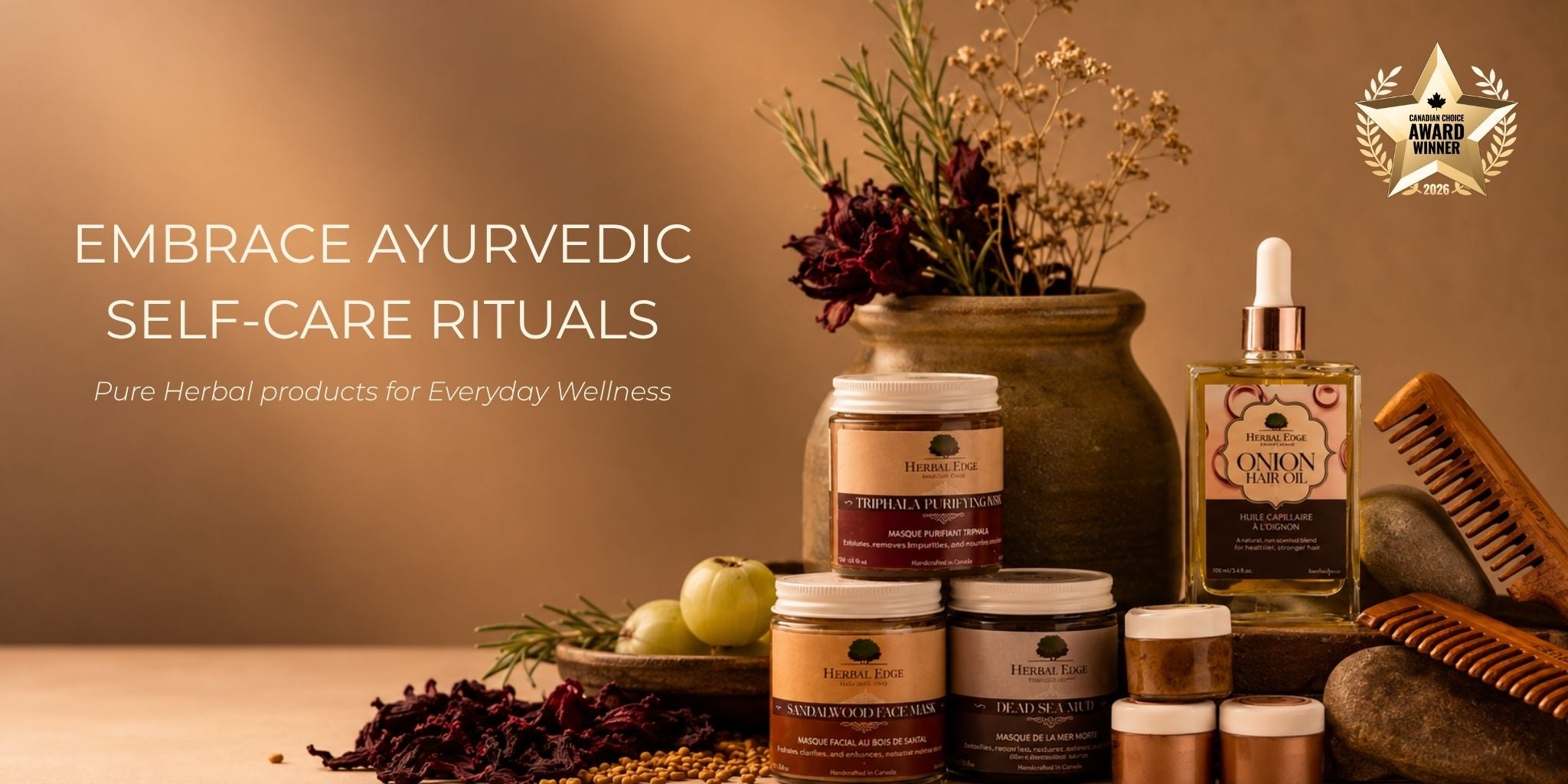
That's not just theory — it's why I formulated our Onion Hair Oil with both onion extract and rosemary, plus amla, hibiscus, shikakai, and fenugreek. One bottle, both pathways, one 5-minute ritual 2–3 times a week.
If you prefer single-ingredient simplicity, either oil used consistently for 3–4 months is a reasonable choice — pick onion for breakage and scalp issues, rosemary for circulation and pattern thinning. But if you want the full picture, the combination is the stronger play.
Frequently asked questions
Can I mix onion oil and rosemary oil together? Yes — they're commonly combined and work through different pathways. Just keep the total essential oil concentration skin-safe, or use a professionally formulated blend.
Which works faster? Neither works fast. Both need 3–4 months of consistent use (2–3 times weekly) before you can fairly judge new growth. Anyone promising faster results is overselling.
Is rosemary oil better proven than onion oil? Rosemary has the stronger head-to-head trial (vs. minoxidil, 6 months). Onion has the more dramatic single result (87% regrowth) but in a smaller, narrower study. Different strengths, different evidence.
Can I use them on colour-treated hair? A well-formulated blend is fine for colour-treated hair. Patch test first, as with any new product.
Why choose when you can have both? Our Onion Hair Oil with Rosemary blends onion, rosemary, amla, hibiscus, shikakai, and fenugreek — handcrafted in small batches in Ontario, with 119 five-star reviews.